Analog vs Digital Mixer: Which Is Right for Your Setup?
| KEY FACTS In 2026, digital mixers have overtaken analog for the majority of professional and semi-professional live sound applications.Analog mixers remain a better choice for very simple setups, situations where technical reliability is the absolute priority, and engineers who find digital interfaces confusing. The cost advantage of analogue at the entry level has largely been eliminated by affordable digital consoles like the Behringer X Air series.The biggest practical advantage of digital for live events is scene recall: the ability to save and reload every setting instantly. This guide gives you an honest framework for deciding which type of console is right for your specific situation. |
This question gets asked constantly, and the answer in 2026 is more nuanced than it was even five years ago. The gap between analog and digital has narrowed significantly. Affordable digital mixers now exist at price points that previously only analog consoles could reach. And the feature advantages of digital, particularly scene recall and built-in processing, have become difficult to ignore even for engineers who prefer the simplicity of analog.
I have mixed on both analog and digital consoles throughout my career, in churches, at outdoor events, at corporate presentations, and at concerts. Neither type is universally better. The right choice depends on your specific situation, your technical comfort level, and what you are actually trying to achieve with your mix.
What Analog Mixers Do Well
Simplicity and Instant Comprehension
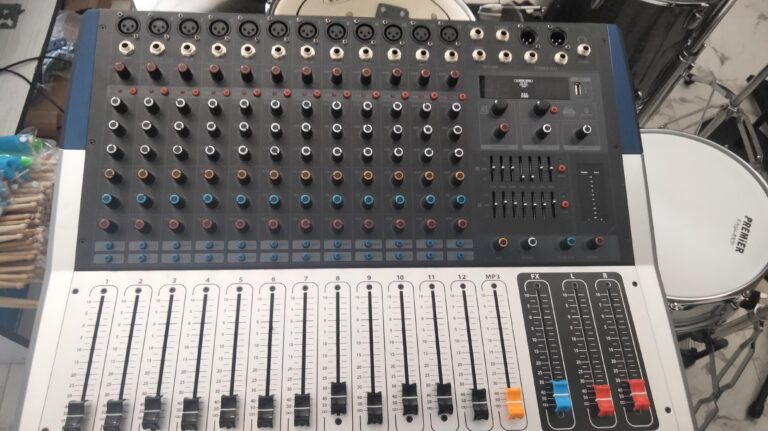
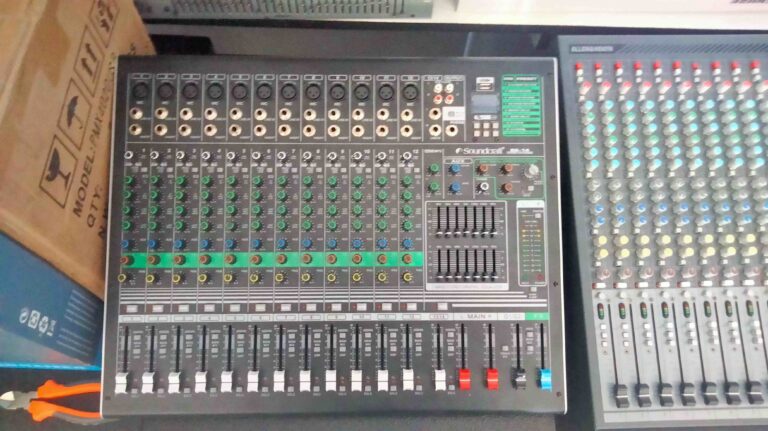
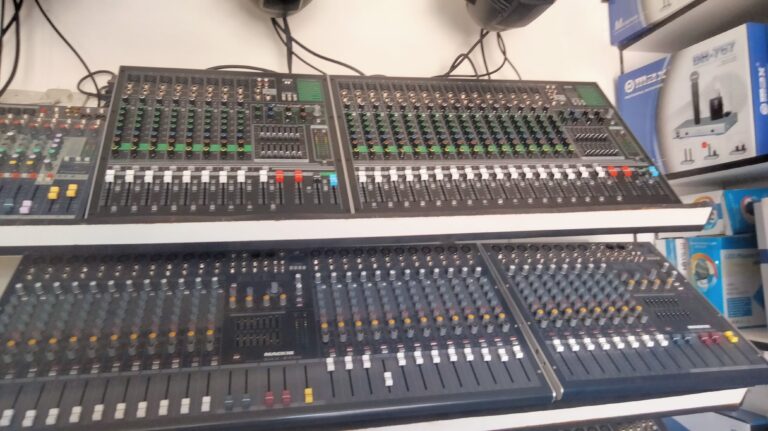
An analog mixer is fully visible and comprehensible at a glance. Every function has a dedicated physical control. The signal path is straightforward: left to right across the channel strip, bottom to top up the fader. There are no menus, no pages, no layers. An engineer who has never seen a specific analog console before can understand its basic operation within minutes.
This transparency is genuinely valuable in certain situations. For a school event or community function where a non-technical volunteer is operating the mixer, an analog console is far less likely to result in a catastrophic accidental menu change that nobody can undo. For an engineer who works occasional events and does not want to maintain proficiency on a complex digital interface, analog is easier to pick up after a gap.
Zero Latency
Analog mixers introduce essentially no processing latency. The signal travels through the circuitry in microseconds, which is imperceptible. Digital mixers introduce processing delay (typically 1 to 3 milliseconds for modern professional units) while the audio is converted to digital, processed, and converted back. In most live sound applications this is inaudible and inconsequential. In applications where the monitor system is critical and performers are sensitive to even very small delays, analog’s zero latency can matter.
Reliability in Simple Setups
An analog mixer with no software, no DSP, and no network connectivity has very few ways to fail catastrophically mid-show. The physical faders and knobs either work or they do not, and diagnosing a fault is straightforward. A digital console with a software crash, a corrupted scene, or a network connectivity issue can be significantly more disruptive to fix under pressure at a live event.
What Digital Mixers Do Well
Scene Recall: The Game-Changing Advantage
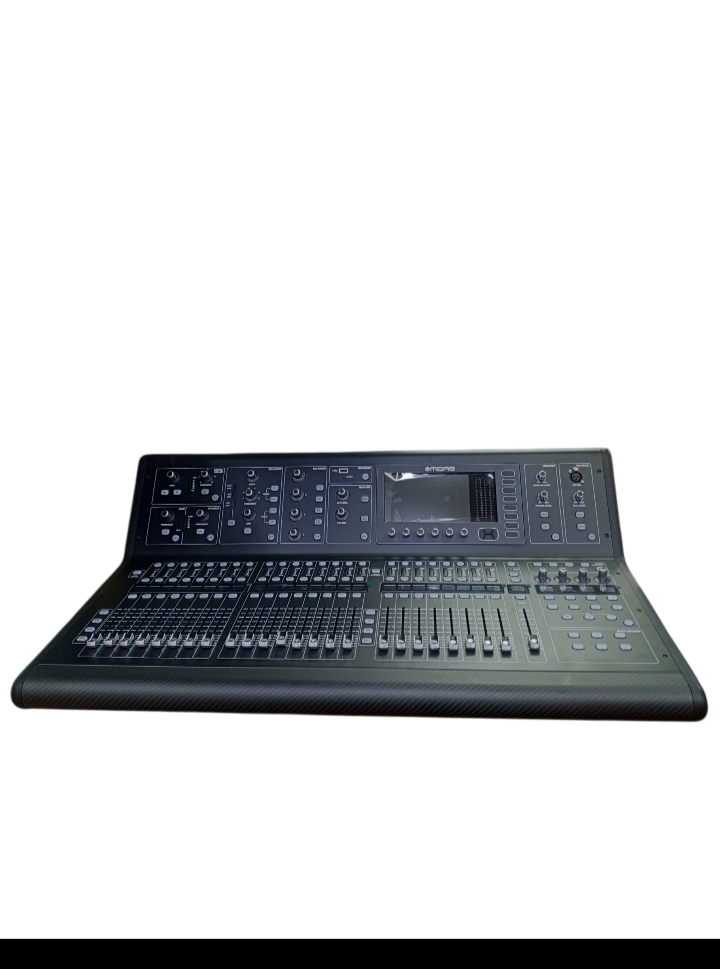
This is the single most significant practical advantage of digital mixers for live events, and it is worth understanding properly. Scene recall means the ability to save every single setting on the entire console and restore it instantly with a single button press or tap on a screen.
Consider what this means for a church that has a Sunday morning service, a Sunday evening service, and a Wednesday prayer meeting, each with different microphone configurations, different monitor mixes, and different EQ settings. On an analog console, the engineer either sets up from scratch each time (taking 30 to 45 minutes) or uses tape marks and hand-written notes to try to recreate the previous settings (never fully accurate). On a digital console, each service configuration is a saved scene. Setup takes 30 seconds.
For touring productions, scene recall means the exact same console settings from last night’s show can be loaded at the start of today’s soundcheck, providing a verified starting point. For any application where the same audio setup is repeated regularly, scene recall saves hours of work and delivers more consistent results than analog can achieve.
Built-in Processing Replacing Outboard Gear
A professional analog setup requires significant outboard equipment to match what a mid-range digital console provides internally: dedicated compressors for vocal channels, graphic EQs on the main outputs and monitor sends, reverb and effects units, a noise gate for each channel that needs one, and a feedback suppressor. Each piece of outboard gear adds cost, rack space, cable runs, and potential failure points.
A digital console includes all of this processing built in, across every channel, with full recallability. The practical and financial implications of this are substantial for any engineer building a system from scratch.
Remote Control and Distributed Mixing
Modern digital mixers can be controlled wirelessly from a tablet anywhere in the venue. This is one of the most valuable workflow improvements in live sound in the past decade. An engineer who can walk the room while adjusting the mix, hearing exactly what the audience hears from every position, will consistently produce better-sounding shows than one who mixes from a fixed console position that may not be acoustically representative of the audience area.
The Real Cost Comparison in 2025
The traditional argument that analog is more affordable than digital has largely collapsed at the entry and mid levels. Consider what an analog console setup requires for a small church or venue application:
- 16-channel analog mixer: $400 to $800
- Compressor for 4 vocal channels: $200 to $400
- Graphic EQ for main output: $150 to $300
- Reverb unit: $150 to $300
- Feedback suppressor: $150 to $250
- Additional cabling and rack space: $100 to $200
Total: $1,150 to $2,250 for a functional but limited system with no scene recall and no remote control.
Compare this to the Behringer XR18 at $550 to $650, which includes all of the above processing on every channel with full scene recall, multitrack USB recording, and tablet remote control. The digital system delivers more functionality at a lower total cost.
At the higher end, analog consoles that match the capability of a $2,500 Behringer X32 would cost $8,000 to $15,000 when the necessary outboard processing is included.
When Analog Is Still the Right Choice
With all of the above, there are still situations where an analog mixer is the better choice:
- Very simple setups with few inputs and no need for effects or dynamics. A two-microphone seminar in a small room, a single speaker presentation system, or a basic acoustic music setup with two or three inputs and a simple monitor mix does not need the complexity of a digital console. A good quality small analog mixer does this job simply and reliably.
- Engineers who are not comfortable with digital interfaces and do not have time to learn. A digital console operated by someone who does not understand it produces worse results than an analog console operated by someone who does. If your operators will not commit to learning a digital interface, analog remains the more reliable choice.
- Situations where a backup system is required and the analog console is the backup. Having a simple analog mixer as an emergency fallback for a digital console failure is a sensible precaution for critical events.
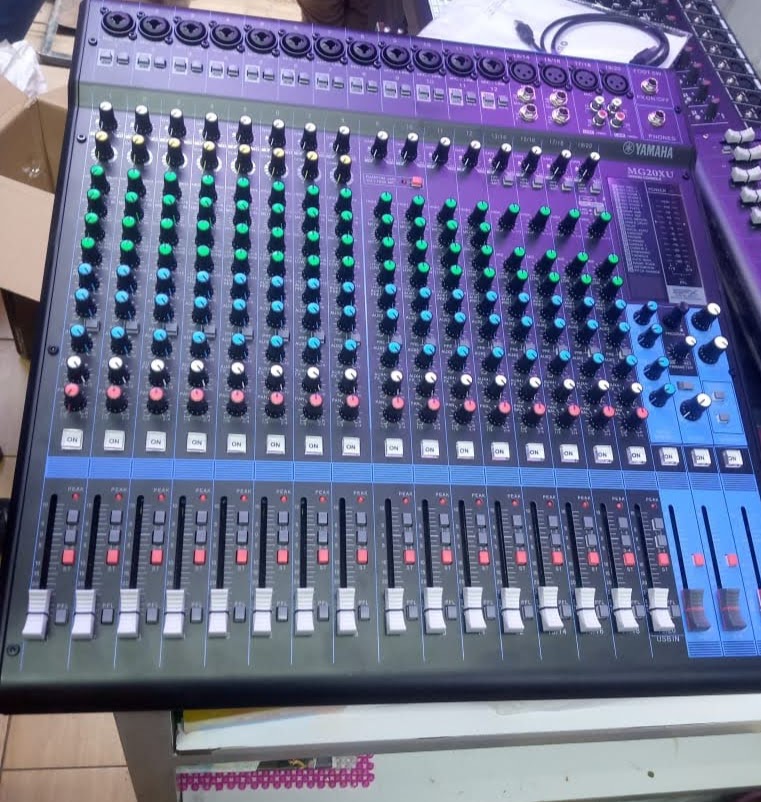
- Second-hand market value. A well-maintained used analog console from a quality manufacturer can be exceptional value. A 24-channel Yamaha MG24XU or a Soundcraft GB4 purchased used at a fraction of original cost delivers excellent audio quality and reliability that budget digital consoles may not match.
The Bottom Line Recommendation
For anyone building a new system in 2025, a digital mixer is the correct choice for the vast majority of live sound applications. The feature advantages, the scene recall workflow, the built-in processing, and the remote control capability deliver real improvements to the quality and consistency of what you can achieve at every event.
The exception is a very simple setup, an operator who will not invest time in learning digital interfaces, or a specific application where analog’s zero latency or simpler fault-finding is genuinely valuable. In those cases, a quality analog mixer remains a perfectly professional choice. But for a church, a rental company, a venue, or a touring engineer building their primary system, digital is the clear direction.
Frequently Asked Questions
Does analog sound better than digital?
At comparable quality levels, no. Modern digital conversion technology is transparent enough that the analog to digital and digital to analog conversion introduces no audible degradation. The difference in sound quality between a well-designed digital console and a well-designed analog console at equivalent price points is negligible in a live sound environment. Where sonic differences are perceived, they are usually the result of preamp quality differences rather than the analog versus digital distinction.
Can a beginner learn digital mixing more easily than analog?
This depends on the individual and the specific digital interface. Some digital consoles (particularly the Soundcraft Ui series with browser control) are designed to be approachable for beginners. Others (complex touring consoles with deep menu structures) have steep learning curves. Analog consoles are immediately comprehensible in their basic operation. The best approach for a beginner is to learn signal flow principles on analog first, then apply that understanding to a digital interface.
What happens if a digital console crashes mid-show?
Modern professional digital consoles are designed with live use in mind and have very low crash rates. Most incorporate watchdog circuits that can restart the console processing without interrupting audio, often in under a second. For genuinely critical applications, having a simple analog console as an emergency fallback on a parallel signal path is a sensible precaution. In practice, digital console failures mid-show are rare with quality equipment that is properly maintained and updated.