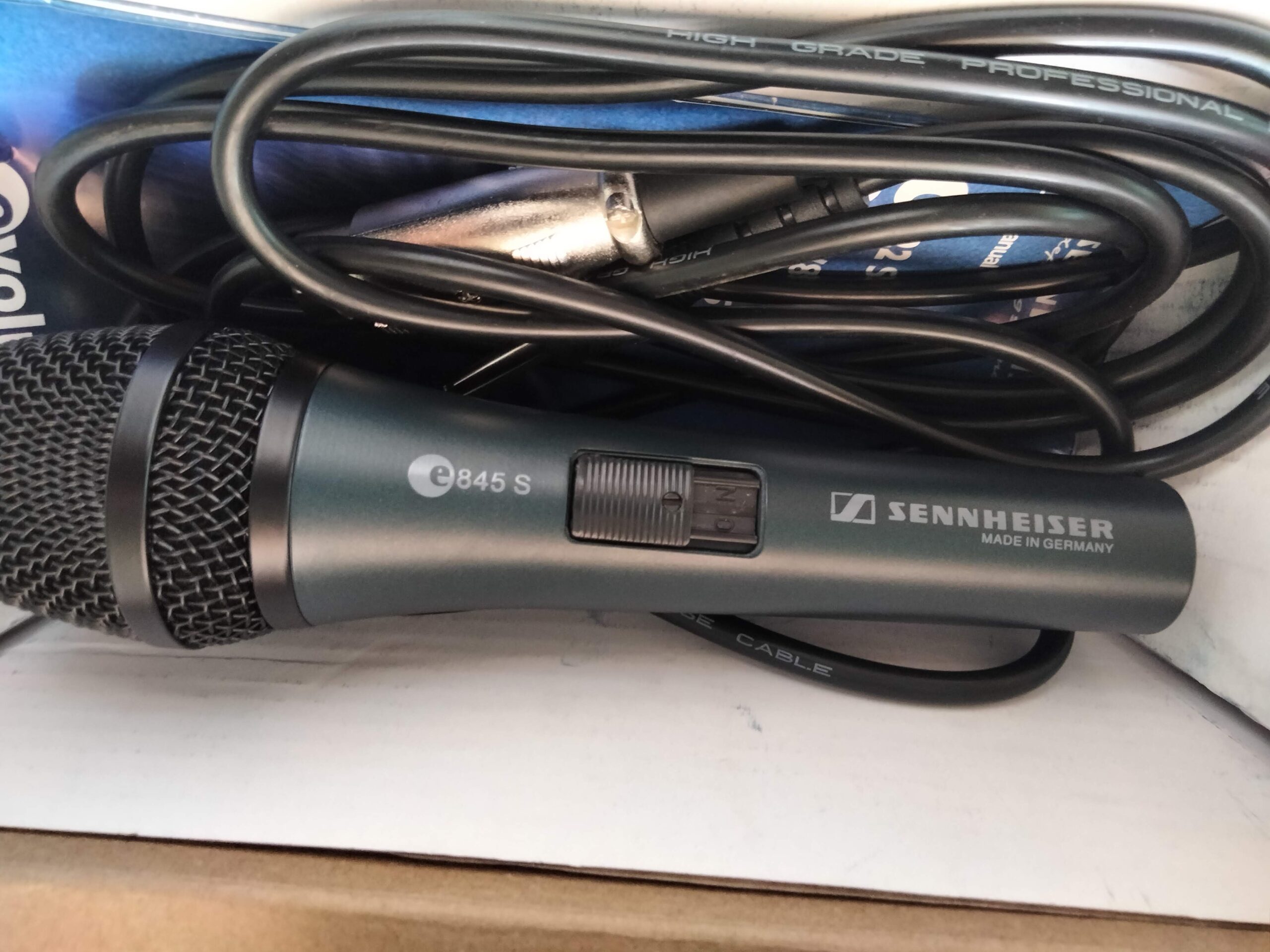
Shure SM58 vs. Sennheiser e835: The Ultimate Vocal Mic Showdown
When it comes to choosing the perfect vocal microphone, two legends dominate the conversation: the iconic Shure SM58 and the increasingly popular Sennheiser e835. Both are dynamic, wired microphones that have earned their stripes in studios, on stages, and in home recording setups worldwide. But which one deserves a spot in your microphone collection?
In this comprehensive comparison, we’ll dive deep into every aspect of these vocal powerhouses, from sound quality and build construction to real-world performance and value. Whether you’re a seasoned performer, aspiring vocalist, or audio engineer, this guide will help you make the right choice for your specific needs.
Don’t forget to check out our Microphone Selector Tool—your quick solution for choosing the perfect mic for any venue or event! 🎤
Quick Comparison Summary
Before we explore the technical grit, here is what you need to know right away:
- Shure SM58: The industry standard with legendary durability, a warmer sound profile, and universal compatibility. It is virtually indestructible and has been trusted by professionals worldwide for over 50 years.
- Sennheiser e835: Features higher output sensitivity than the SM58, making it excellent for lower-volume vocalists. Its boosted high-frequencies deliver a crisp, hi-fi, modern sound signature out of the box.
The winner? It depends entirely on your voice type, musical style, and venue acoustics. Let’s break down the underlying engineering.
Sound Quality: Dynamic Frequency Profiles Compared
Frequency Response and Presence Peaks
The most significant divergence between these microphones lies in their frequency response curves and acoustic tailoring.
The Sennheiser e835 features an extended high-frequency range (40 Hz to 16 kHz) with a pronounced brightness shelf stretching up toward 12 kHz. Crucially, it incorporates a smooth, wide low-end rolloff up to 200 Hz. This low-frequency attenuation automatically counters muddy proximity effects when a performer sings tightly against the grille, delivering natural clarity that cuts through dense instrument mixes without excessive board processing.
The Shure SM58 operates on a classic, time-tested frequency curve (50 Hz to 15 kHz). It features a deliberate, pronounced midrange presence peak centered between 2 kHz and 4 kHz. This specific boost is engineered to give rock and pop vocals distinct bite and punch. Upper-mid frequencies above this peak drop off more conservatively than the Sennheiser, resulting in a more rounded, forgiving, and slightly warmer top-end character.
Vocal Suitability and Tonal Character
Because the Sennheiser e835 is inherently brighter, live sound engineers are far less likely to rely on aggressive channel strip EQs to get a vocal to stand out in a busy mix. It provides excellent separation in complex, modern arrangements and flatters soft, airy singers or spoken-word presenters who need help with articulation.
Conversely, the Shure SM58 is a traditional rock-and-roll workhorse. While it can sound somewhat darker or “muddier” in the low-mids compared to the e835, this characteristic is prized as desirable warmth, chest weight, and body. It is highly forgiving on harsh, sibilant voices or thin vocal tones that would otherwise sound piercing on a brighter capsule.
Build Quality and Durability: Battle of the Titans
Construction and Enclosure Mechanics
Both microphones are built like industrial tanks, but they approach physical durability with different design philosophies.
The SM58 has earned legendary status for its shock-absorbing architecture. The iconic spherical mesh grille is deliberately engineered to deform and dent upon heavy impact, acting as a crumple zone that sacrifices itself to shield the internal cartridge underneath. Stories of SM58s surviving massive stage drops, moisture exposure, and touring abuse are a staple of audio folklore.
The Sennheiser e835 matches this ruggedness with a streamlined, sleek profile featuring:
- A heavy, solid metal die-cast housing throughout.
- An advanced, reinforced steel mesh basket that resists denting under direct drops.
- An advanced internal rubber shock-mount system that suspends the entire capsule.
- Professional-grade, gold-plated XLR pins to ensure corrosion-resistant contact over decades.
The build quality on both options is exceptional, guaranteeing that either choice will survive regular, rigorous touring use.
Weight and Ergonomics
There is a slight difference in physical weight and hand-feel between these two enclosures. The Shure SM58 is slightly lighter at 0.66 lbs (298 grams), making it marginally more comfortable for extended handheld use during long theatrical or concert sets.
The Sennheiser e835 feels heavier and more substantial in the hand. However, the ergonomic variance is minimal and unlikely to cause hand fatigue for the vast majority of performers.
Performance in Different Environments
Live Performance and Monitor Tuning
For live stage applications, both microphones excel, but their distinct pickup characters require different approaches at the monitor console:
- Stage Vocals: The e835’s crisp top-end helps live vocals cut through loud guitar walls or acoustic drums. The SM58’s predictable, punchy midrange provides instant familiarity for vocalists who rely on traditional stage monitoring.
- Feedback Rejection: Both microphones utilize a tight cardioid polar pattern, which naturally rejects sound coming directly from the rear (180° off-axis). However, because the e835 has an elevated high-frequency sensitivity, engineers in highly reverberant, untreated venues must be precise when ringing out high-frequency hot spots to maximize gain-before-feedback. The SM58’s controlled top-end can provide a safety buffer in acoustically hostile rooms.
- Handling Noise: Both manufacturers incorporate sophisticated internal shock-mounting. However, the e835’s advanced suspension capsule dampens low-end rumble and mechanical handling noise slightly better when a performer aggressively paces or shifts their grip on the stage floor.
Studio Recording Capabilities
In a home studio or project tracking environment, the choice becomes more nuanced. The Sennheiser e835’s high-end boost mimics the clarity of an affordable condenser microphone, making it highly suitable for modern digital production styles that demand crisp presence and immediate detail.
The SM58, with its warmer, flatter top end, behaves predictably in less-than-ideal tracking rooms. It requires less aggressive de-essing in post-production and handles high-SPL sources—like guitar cabinets or snare drums—exceptionally well.
Value, Pricing, and Market Placement
Initial Capital Investment
Both microphones are positioned at nearly identical entry-level price points, typically falling within the $100 to $150 range depending on your regional retailer and current promotions. This absolute price parity means your decision should be based entirely on sonic preference and your specific vocal characteristics rather than budget restrictions.
Long-Term Asset Value
Both models represent exceptional long-term investments for any rental house, venue, or personal gear locker. The SM58’s universal, industry-standard status guarantees strong, immediate resale value anywhere in the world.
Meanwhile, the e835’s growing reputation for modern clarity has made it increasingly sought-after on the secondary market by independent engineers and house-of-worship technical directors.
Why Wired Mics Still Matter in 2026
In a live production landscape heavily dominated by digital wireless systems, choosing a classic wired microphone remains a vital, strategic decision for critical audio paths:
Absolute Reliability and Continuity
Where zero-failure operation is mandatory, wired microphones remain supreme. Unlike wireless setups, a copper XLR connection completely eliminates:
- Sudden battery drain failures during a critical performance or sermon.
- RF interference from local cell towers, Wi-Fi routers, or digital devices.
- Unpredictable multi-path dropouts caused by physical venue obstructions.
- Complex, high-pressure local frequency coordination challenges before a show.
Superior Audio Quality per Dollar
At equivalent price brackets, a wired microphone will always deliver vastly superior audio fidelity compared to a wireless system. Because manufacturers do not need to budget for radio transmitters, internal antennas, analog compander chips, or digital converters, 100% of the manufacturing cost is invested directly into high-grade capsule metallurgy and acoustic design.
Operational Simplicity
If your performance layout can accommodate a stage cable, wired microphones offer an effortless plug-and-play workflow. Tech volunteers do not need to navigate receiver sync menus, scan local white spaces, or monitor battery bars. You plug the cable in, set your preamp gain, and the system works flawlessly.
Making Your Decision: Which Mic is Right for You?
Choose the Shure SM58 if:
- You prioritize a legendary track record of absolute touring reliability above all else.
- Your voice has a naturally bright, sharp, or thin tone that benefits from a warmer, more forgiving midrange character.
- You perform in rock, blues, or traditional genres where the classic SM58 sonic footprint is expected.
- You want absolute, universal compatibility with any rental rig or venue system worldwide.
Choose the Sennheiser e835 if:
- You want a brighter, modern, hi-fi vocal sound straight out of the box without relying on heavy mixer EQ.
- Your voice lacks natural high-end articulation and needs mechanical assistance to cut through a dense band mix.
- You are a soft or dynamic singer who benefits from a capsule with higher output sensitivity.
- You record or present in modern genres that demand pristine, crisp intelligibility.
Professional Engineering Summary
Many contemporary audio professionals agree that the Sennheiser e835 offers superior out-of-the-box clarity, top-end open air, and transient definition compared to a stock SM58.
However, this does not make it a universal solution. If you are building a home studio and want a single, crisp vocal microphone for modern digital mixes, the e835 is highly efficient. If you are a gigging musician or venue manager who needs an indestructible tool that sounds consistently good on any human voice that steps up to the stage, the classic Shure SM58 remains the safest standard in the industry.
Frequently Asked Questions
1. Is the Sennheiser e835 really better than the Shure SM58?
The e835 delivers a brighter, more modern tonal curve and handles low-end rumble more efficiently, which many engineers consider an acoustic upgrade over the older SM58 design. However, the SM58’s prominent mid-range punch and forgiving character make it a better match for harsh or sibilant voices. “Better” depends entirely on matching the capsule to the individual performer’s vocal anatomy.
2. Can I use these microphones for tracking instruments besides vocals?
Absolutely. Both are dynamic workhorses. The Sennheiser e835’s extended top end and low-frequency rolloff make it exceptional for acoustic guitars, hi-hats, and bright brass instruments that require transient detail. The Shure SM58’s warm midrange presence makes it an industry-favorite alternative for miking guitar amplifier grilles, snare drums, and deep brass.
3. Do I need an external pop filter when using these microphones?
Both microphones feature integrated acoustic foam layers embedded inside their steel grilles, acting as highly efficient built-in pop filters for standard live performances. However, if you are tracking close-up studio lead vocals or hosting a podcast where plosive air blasts (“P” and “B” sounds) are highly exaggerated, adding an external nylon or metal pop filter will help prevent low-frequency capsule clipping.
4. Are these options suitable for modern podcasting and streaming setups?
Yes, both are excellent for broadcast-style audio. The e835’s crisp presence shelf helps speech cut through ambient background noise or PC fan hiss cleanly. The SM58’s forgiving proximity effect delivers a rich, authoritative, “radio-host” broadcast warmth when a speaker stays close to the microphone.
5. Why should a venue choose wired over wireless microphones today?
Wired microphones deliver absolute signal consistency, superior dynamic range, zero battery overhead, and plug-and-play simplicity at a fraction of the cost of a professional wireless system. While wireless provides mobility, a wired mic remains the standard for critical vocal paths, tech booths, and fixed pulpits where audio failure is not an option.